The Plant That Never Hit Its Rated Output
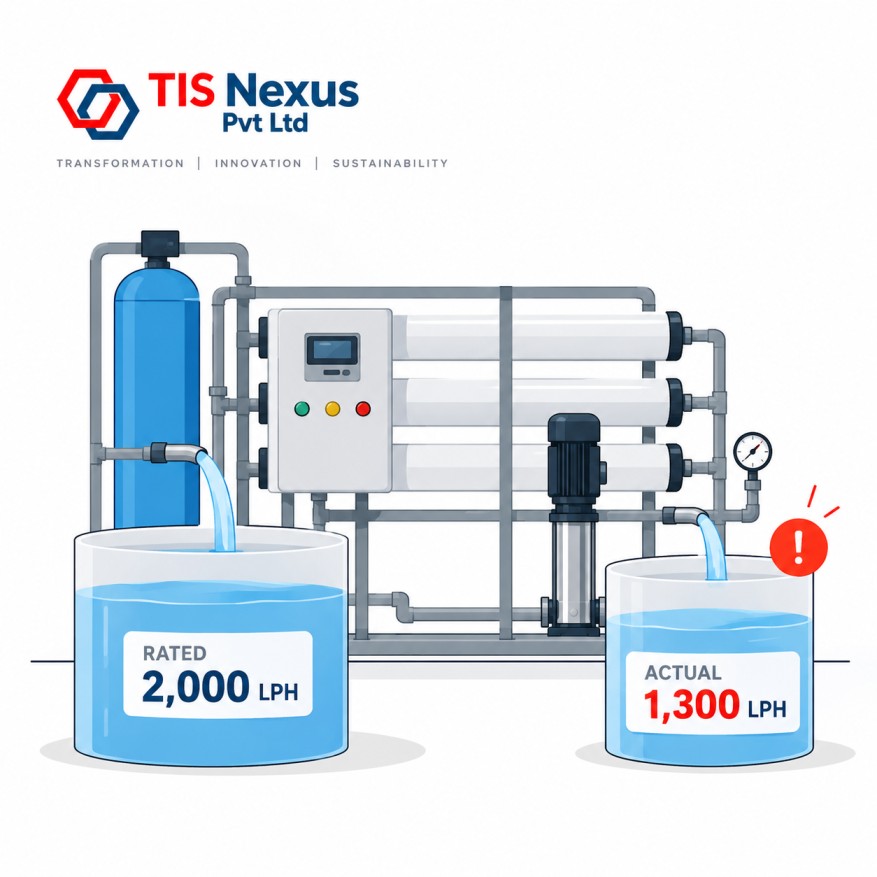
A dairy unit near Meerut called us in March, about eight months after commissioning. The owner was polite about it, which made it worse. His RO plant was supposed to give 2,000 LPH and was giving something like 1,300 on a good day. The supplier had stopped picking up calls by then.
I went over with one of our fitters. The skid looked fine from the door. Stainless frame, neat piping, a nice panel. Then we opened the membrane housings and found fewer elements than the drawing showed. Nobody had lied on paper, exactly. The quote said "2,000 LPH" and never said at what water temperature or what feed quality. In a Meerut January that figure was fantasy.1
I think about that plant whenever someone asks me how to pick between ro plant manufacturers india has on offer. There are hundreds. Plenty are good. A fair number are traders who buy a skid from someone else and put their own sticker on it.
Manufacturer or Trader, and Why It Matters More Than Price
Walk into any industrial area in Delhi NCR and you'll see shops with "manufacturer" painted on the wall. Half of them assemble. A few fabricate. Very few do both and also service what they sell.
The difference shows up at year two. A true manufacturer has the welding jig, the pump stock and the person who designed the thing. A trader has a phone number for the person who did. When a high-pressure pump seizes in May, with the factory running double shifts, that gap costs you days.
I'd ask to see the fabrication floor. Not a photo of it. If they hesitate, or the "factory" is a godown with two guys and a drill, that tells you what you need. One buyer I know in Noida went to see a supplier's unit unannounced on a Sunday. The place was shut and the address belonged to a sweet shop. He saved himself a few lakh.
Reading a Quotation Like a Skeptic
Quotes from water treatment plant manufacturers tend to look alike until you read the small lines. Membrane make, number of elements, pump rating, pre-treatment stages. One quote we saw for a garment unit in Ludhiana listed a sand filter but no carbon filter, on borewell water with visible iron. The price was lower. Of course it was.
Ask what feed water the design assumed. Ask whether they saw a lab report or just took your word on the TDS. A plant sized on a guess is sized on luck. I'll come back to this in the Tiruppur story below, because that one went wrong in a different way.
Sizing the Plant: A Textile Unit in Tiruppur
This one still annoys me. A dyeing unit wanted to cut its fresh water bill and asked three suppliers for an RO system. Two of them quoted off the daily water use the owner gave them, roughly 60,000 litres, and divided by a ten-hour day. That gave them a number around 6,000 an hour and they priced a plant for it.
Nobody asked about recovery. The reject water from that design would have been close to a third of the feed, and the unit's effluent plant was already struggling. So the real saving was smaller than the pitch. The third supplier asked about the effluent side first, took samples twice, and came back with a bigger plant that ran at a higher recovery with a staged layout. It cost more upfront. I'd have signed that one too.
The LPH figure on a brochure is only half the story, and honestly it's the half salesmen like. What matters is the permeate you get on your worst feed day, in your hottest or coldest month, with your fouling. A plant in Punjab in December and the same plant in Chennai in June are not the same plant.
The Mistake I See Buyers Make Every Year
They buy on the headline capacity and ignore pre-treatment. I've watched people argue over a few thousand rupees on the RO skid itself and then accept a thin pre-filter setup because the salesman said it was "standard".
A pharma packaging site in Baddi did exactly this. Membranes were fouled within four months. Replacement set cost them more than the entire pre-treatment train would have. The supplier blamed the feed water. The feed water was the same water they'd been told about at the start.
Pre-treatment is boring, and it's where most failures start. I'd spend there before I spent on a fancier control panel. Automatic panels are nice. They don't save a membrane that's clogged with iron.
What a Reasonable Reference Check Looks Like
Brochures prove very little. When we talk to buyers I tell them to ask for two running installations of a similar size and water type, and then actually call those people. Not the supplier's friend. The plant operator, if you can reach one.
We did this ourselves once for a bottling line in Haryana, and the operator told us the supplier had replaced a pump within two days, no argument. That one conversation was worth more than the whole catalogue.
Visit if you can. Look at how the piping is labelled, whether the drain is clean, whether there are spare cartridges on a shelf or an empty corner. You can tell a lot from a plant room that isn't staged for visitors.
Where Ro Plant Suppliers Hide the Cost
Service contracts, mostly. Some ro plant suppliers quote low and make it up on membrane replacement, antiscalant and visits. I'd want the consumables listed with rough annual spend before signing anything. Ask what a full membrane set costs in year three. Ask who does the cleaning-in-place and how often they'd come.
A textile buyer in Panipat once showed me his AMC. It listed nothing about response time. Four days passed before anyone turned up for a tripped high-pressure switch. He lost a production shift. Response time should be on paper, with a number in hours.
Looking at Water Purification Manufacturers Who Also Build Custom
Standard skids work for standard water. A lot of Indian industrial water isn't standard. Borewell water in parts of Rajasthan has high fluoride and hardness together, and canal water in Punjab swings with the season. A manufacturer who has built for your kind of water before is worth more than a cheaper one who hasn't.
If you'd like to see what a full-range builder lists, the range of commercial and industrial RO plants from TIS Nexus is a decent reference point for what specification detail should look like on a quote. Compare it with whatever you've been handed. Gaps show up quickly.
We build to the water, not to a catalogue number. That sounds like a slogan, I know. In practice it means a site visit, a water sample, and a design that sometimes comes out bigger than the buyer hoped.
A Short Checklist in My Head, Not on Paper
Before I'd release an advance I want the water report in hand, the membrane make written down, and the commissioning test defined. Defined means a flow figure, a duration, and who signs.
One buyer I worked with in Gujarat held back the final fifteen percent until a seventy-two hour run met the rated flow. His supplier grumbled. The plant passed. Both sides were calmer afterward.
For anyone shortlisting right now, the TIS Nexus reverse osmosis plant range is one place to compare specs line by line. The same applies to any supplier you speak to, really.
Ending With the Dairy Unit
The Meerut owner replaced his supplier in the end. Same site, same water. The new plant, built properly, held 2,000 an hour through the winter with some margin left over. He still keeps the old skid in a corner of the yard, and every few weeks someone asks him what it is.
-
The supplier's only test run had been in August. Nobody mentioned that until we asked. ↩